Insights
Friday, July 24, 2026 EU Ecolabel DID list detergents cosmetics paints CAS number chemical data reproducibility SSbD Safe and Sustainable by Design PEF LCA ecodesign chemical sustainability Ecolabel criteria reference dataset
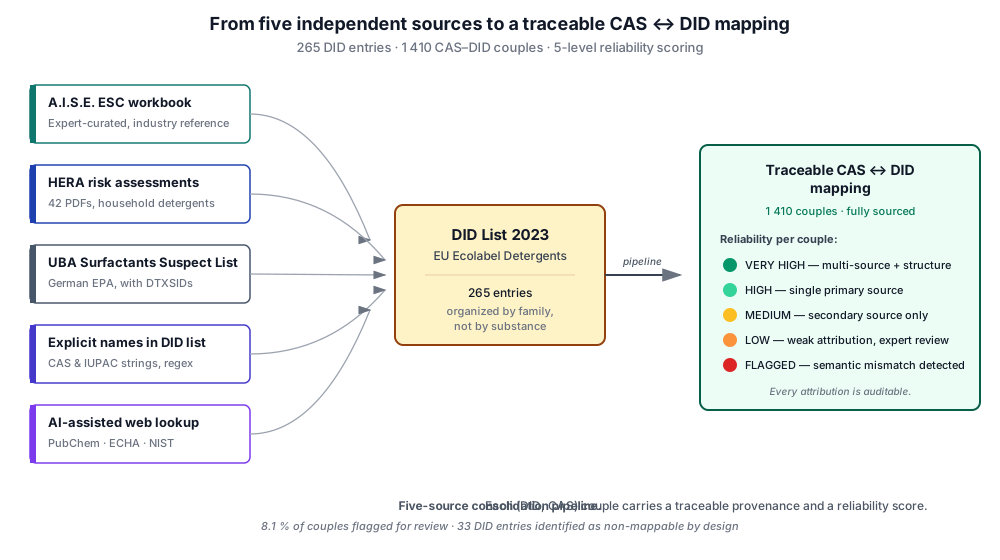
Every European cosmetic, detergent or paint formulator applying for the EU Ecolabel runs into the same wall. The reference document — the Detergent Ingredients Database (DID list) — is organized partly by chemical family and partly by substance, with no clear guidance on which is which. Formulators work from CAS numbers on their Safety Data Sheets; the Ecolabel criteria refer to DID entries. The bridge between the two exists nowhere officially. Each company ends up rebuilding its own mapping, inconsistently, dossier after dossier.
Monday, June 8, 2026
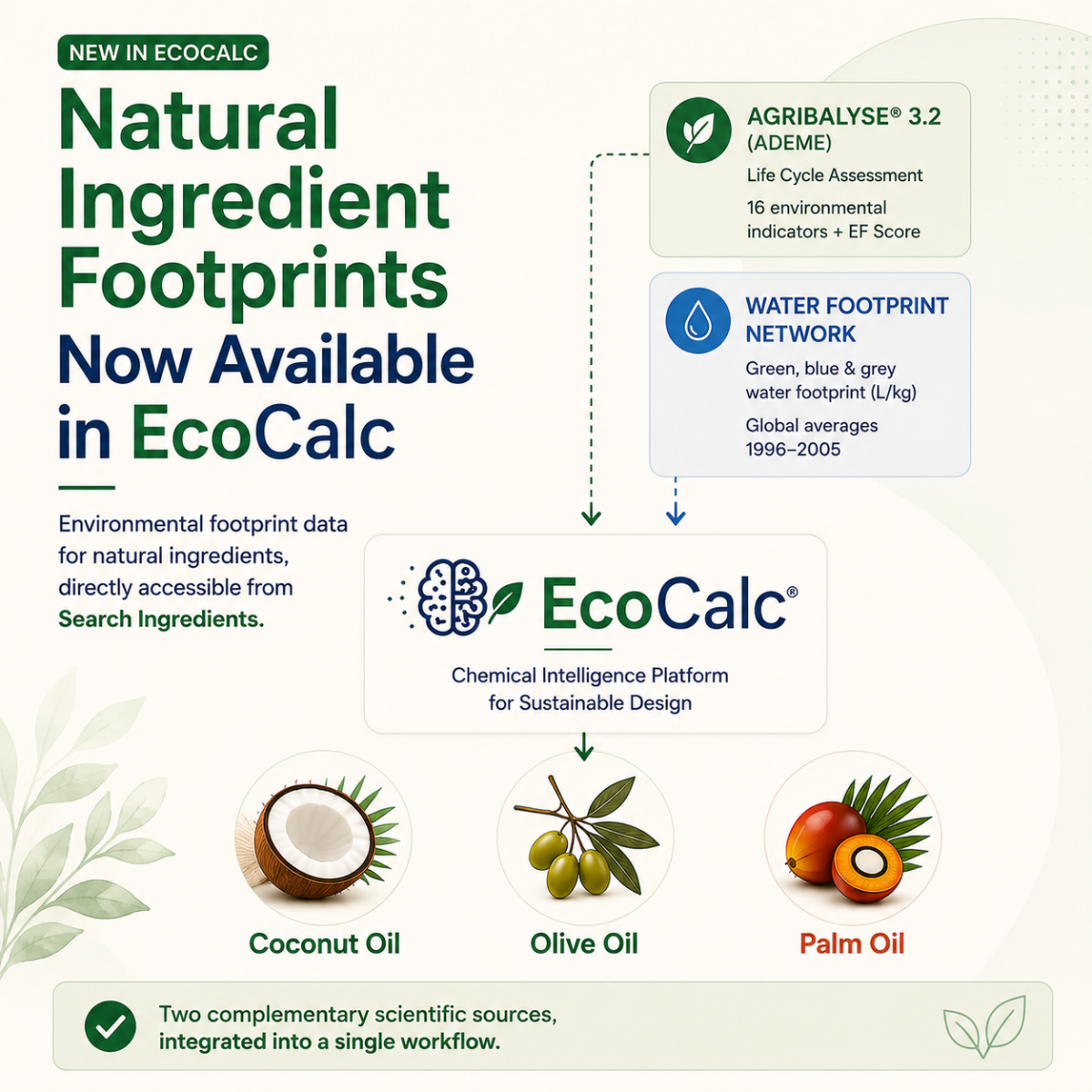
EcoCalc now integrates two reference scientific sources to assess the environmental footprint of natural ingredients(vegetable oils, oilseeds, spices, honey, molasses) used in cosmetic and detergent formulation. This factsheet presents the sources, their integration in the platform, and three concrete examples.
Tuesday, March 24, 2026 EcoCalc chemical data ecotoxicity Safe and Sustainable by Design SSbD EU Ecolabel AFNOR Spec 2215 formulation eco-design green chemistry
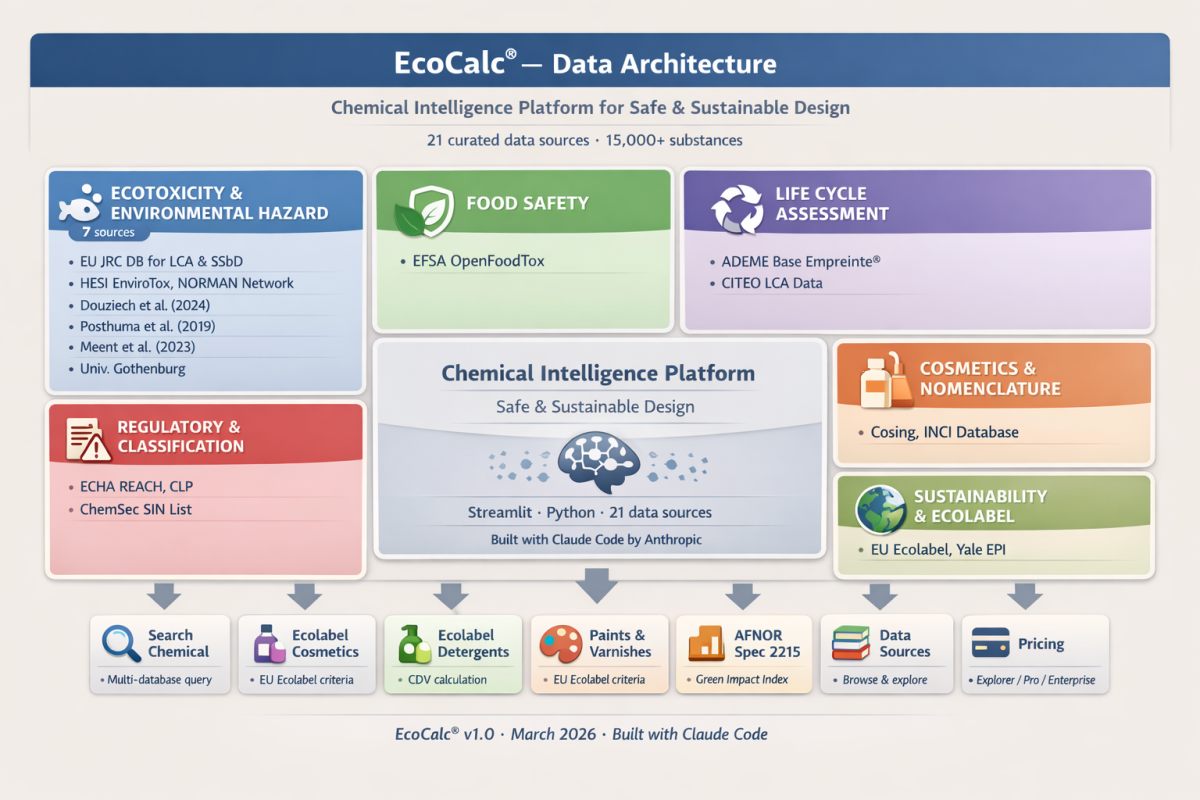
What if formulators could access the same quality of environmental and toxicological data as large corporations — without the months of manual research? EcoCalc® consolidates 21 expert-validated databases into a single platform, turning weeks of data collection into hours of actionable insight.
Tuesday, January 6, 2026 DALY USEtox human toxicity LCA methodology health impact assessment comparative toxicity assessment CTUh epidemiological metrics chemical safety disability-adjusted life years
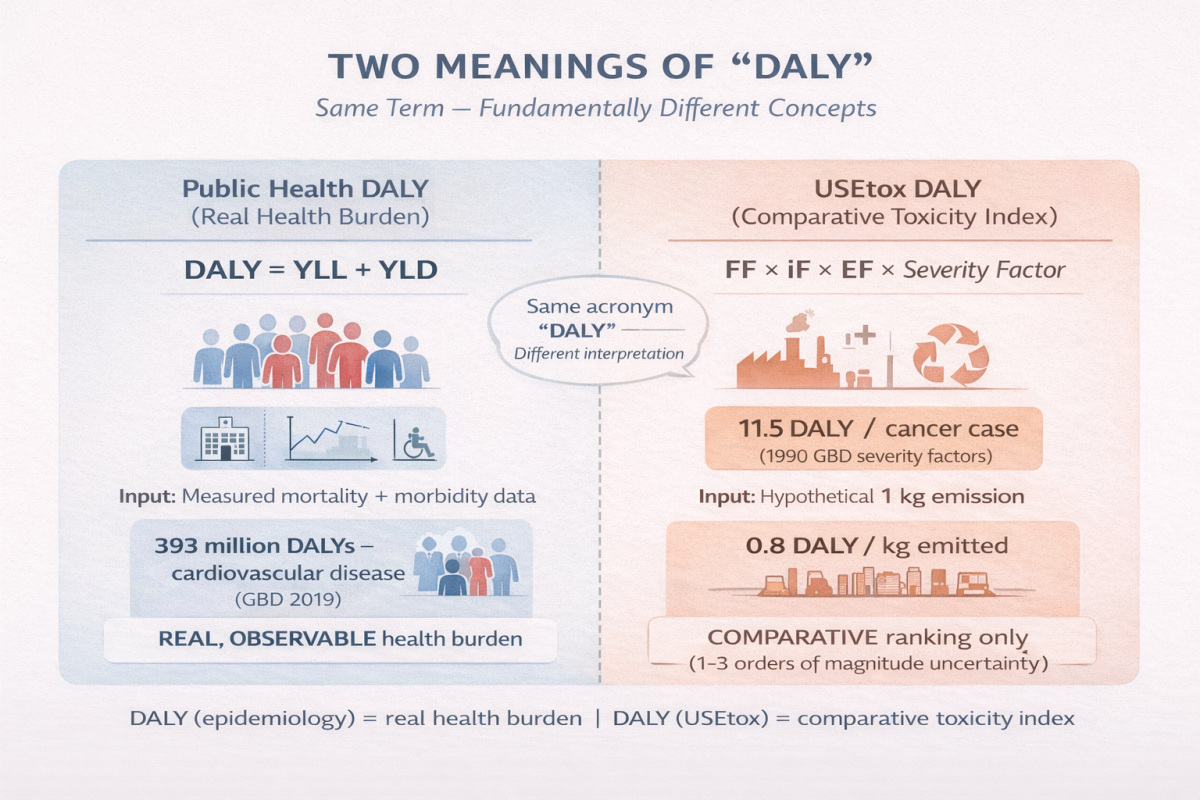
How USEtox Human Toxicity Assessment Borrows Epidemiological Language for Comparative Indices. In public health, DALY means "years of life lost"—a measure of real disease burden in populations. In LCA, "DALY" appears in USEtox scores as a comparative lifecycle index with 1-3 orders of magnitude uncertainty. Same acronym, fundamentally incompatible meanings. When toxicologists see "15.3 DALY," they interpret real health impacts. What the score actually represents: a persistence-intake-toxicity ranking metric that cannot answer "Is this safe?"
Tuesday, December 30, 2025 PAF USEtox ecotoxicity aquatic toxicity assessment
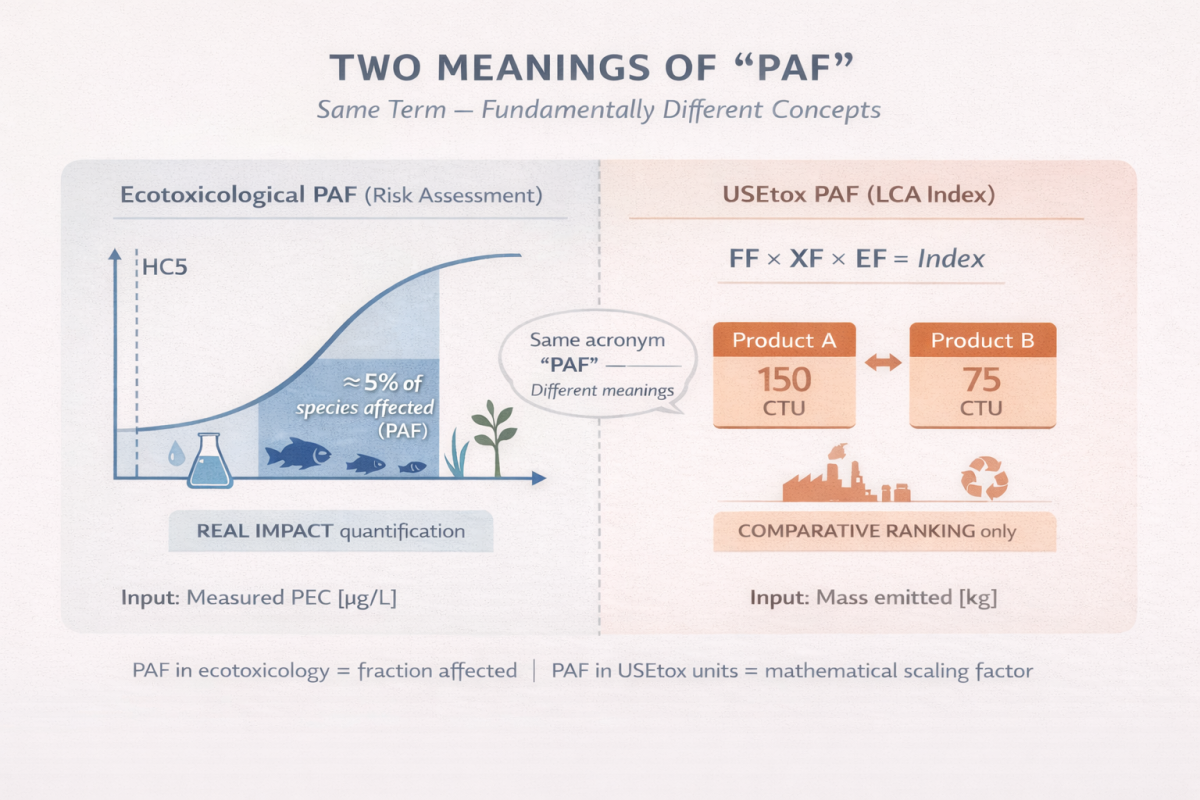
Secondary keywords: species sensitivity distribution CTUe ecosystem impact metrics comparative ecotoxicity PAF interpretation in LCA potentially affected fraction confusion USEtox ecotoxicity limitations
This short article concerns the interpretation of the USEtox unit used for the aquatic toxicity impact category used in LCA/PEF. A follow up article will address the use of DALY for the human impact assessment category.

Monday, December 22, 2025 Keywords: USEtox EUSES Life Cycle Assessment Risk Assessment REACH Ecotoxicity SimpleBox Safe and Sustainable by Design SSbD Characterization Factor PNEC PEC
If you've worked at the intersection of Life Cycle Assessment and chemical Risk Assessment, you've probably heard this debate: 👉 LCA practitioners think RA misses the bigger picture : cumulative effects of thousands of chemicals and long-term low-dose impacts that single-substance assessment cannot capture. 👉 Risk assessors argue USEtox scores have no proven link to actual human & ecosystem harm—and that only substance-by-substance RA can truly protect human health and the environment.
Tuesday, December 16, 2025 #LifeCycleAssessment #LCA #USEtox #ChemicalSafety #Toxicology #EnvironmentalFootprint #Sustainability #GreenChemistry #SSbD #SafeAndSustainableByDesign #ProductStewardship #REACH #EcoDesign #CircularEconomy #SustainableChemistry
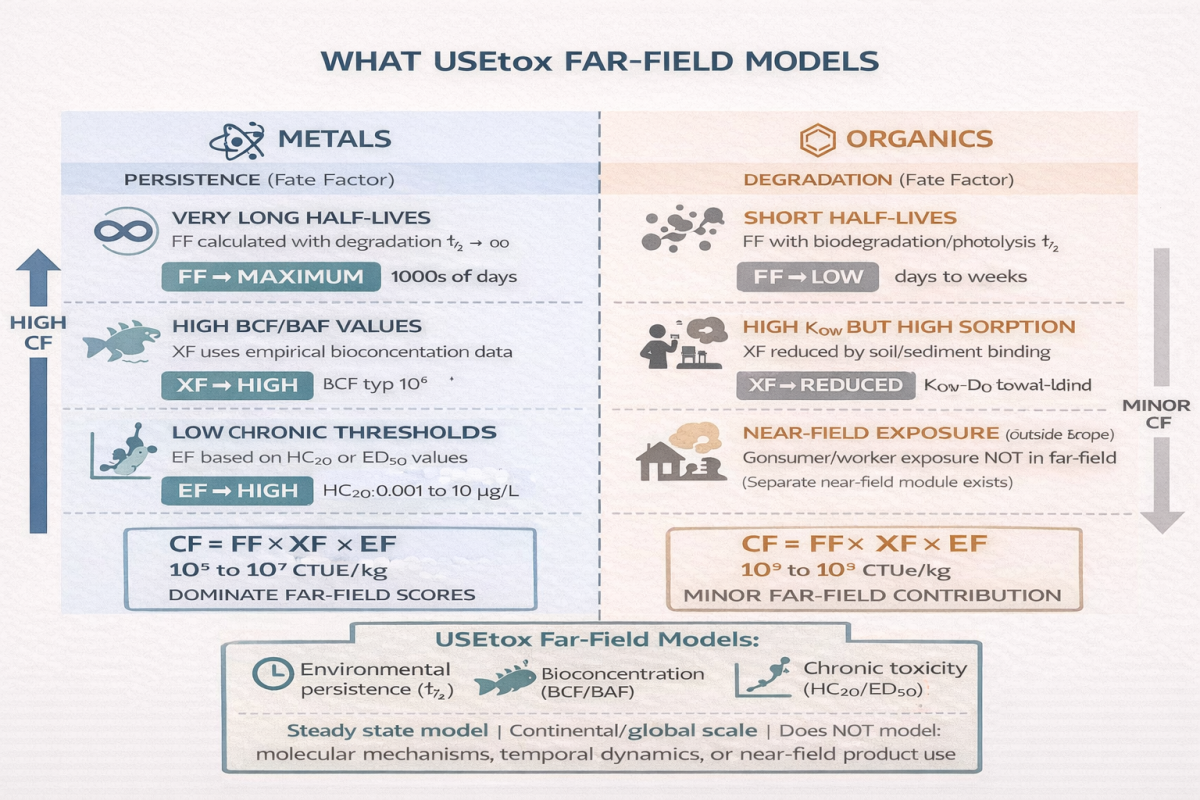
In every LCA you've run, metals probably dominates your ecotoxicity scores—even if your product doesn't contain a single gram of it. This isn't a bug, it's exactly how USEtox was designed.
Wednesday, December 10, 2025
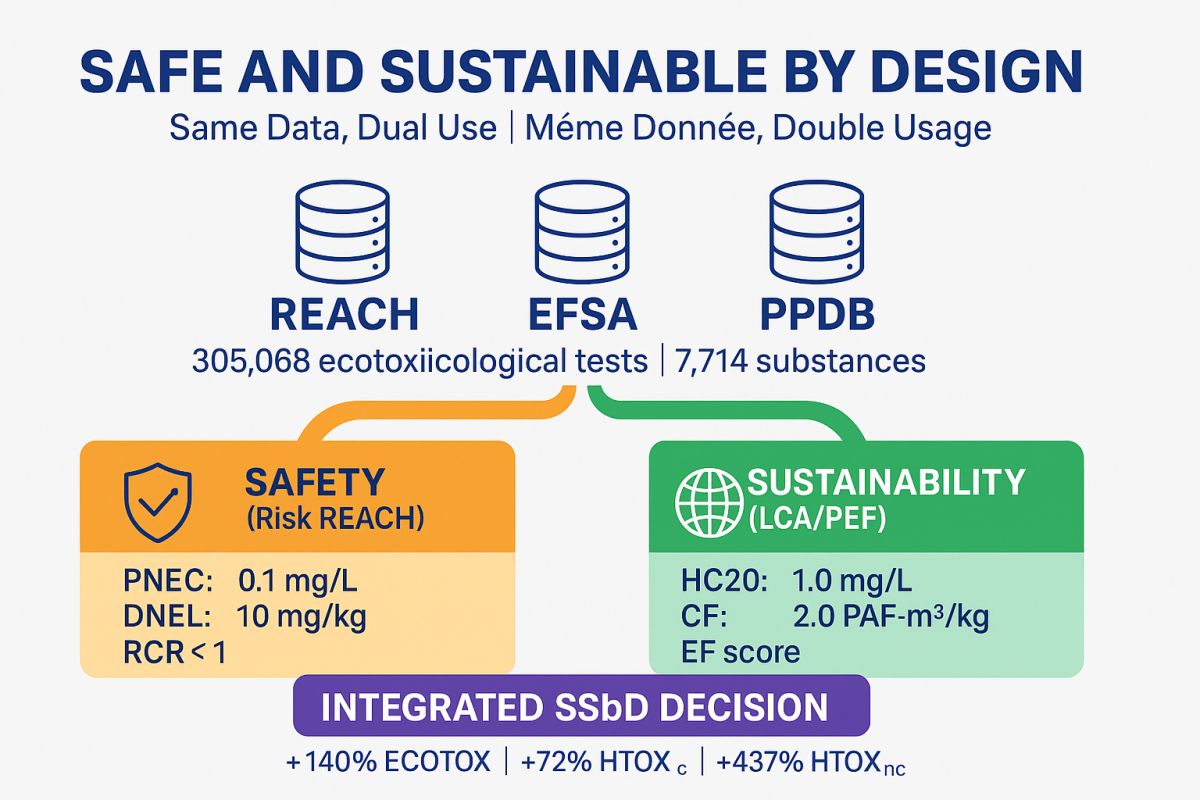
The Safe and Sustainable by Design (SSbD) framework, promoted by the European Commission in its Chemicals Strategy for Sustainability, calls for an integrated assessment combining Safety and Sustainability from the design stage of substances and materials. This ambition requires toxicological and ecotoxicological data that can simultaneously serve two complementary objectives:
Tuesday, December 2, 2025
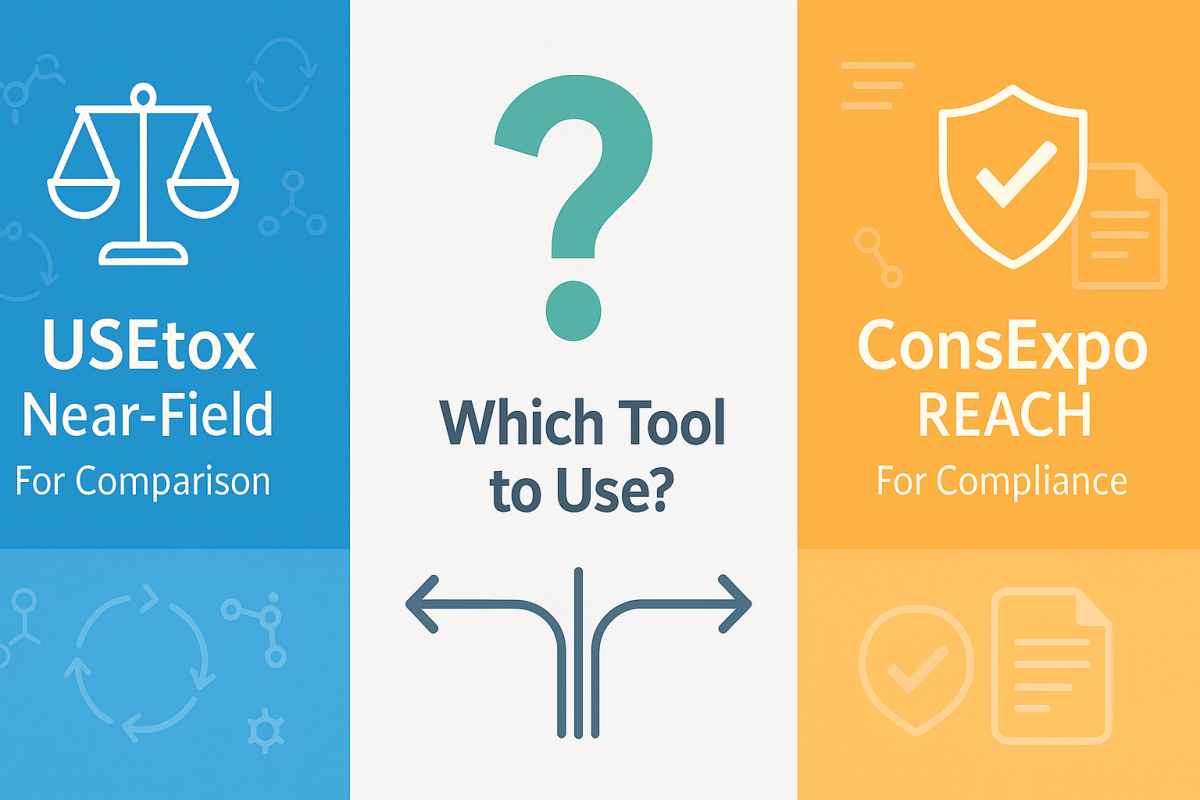
The recent integration of the near-field module into USEtox represents a major methodological advancement for assessing the sustainability of chemical substances. However, this innovation does not—and should not—replace consumer risk assessments conducted with regulatory tools like ConsExpo. Here's why both approaches are essential in a comprehensive SSbD strategy.
Thursday, November 20, 2025
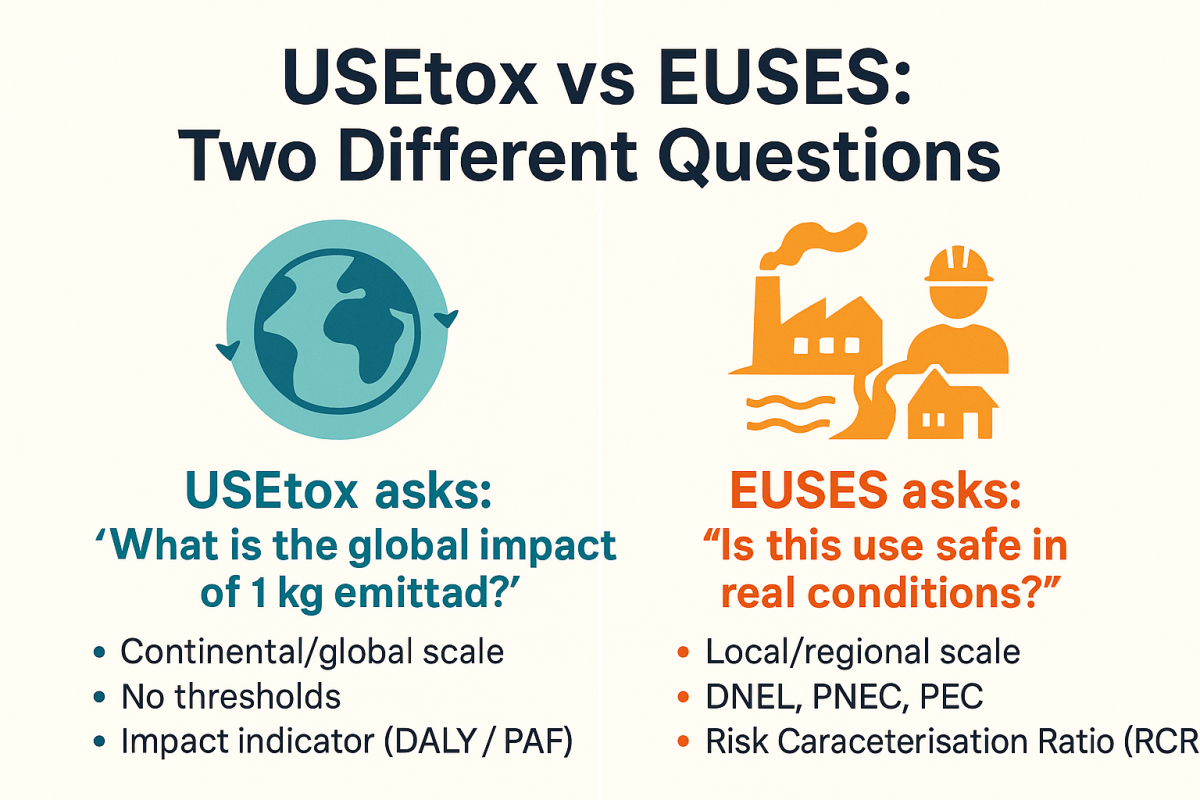
The purpose of this article is therefore to explain why USEtox Far-Field and 'EUSES'-based Risk Assessment cannot be interchanged, and why using USEtox for both safety and sustainability is not recommended.